

Reformulating the Objectives of the Development Road
Dr. Youssef Mohammed Sadiq
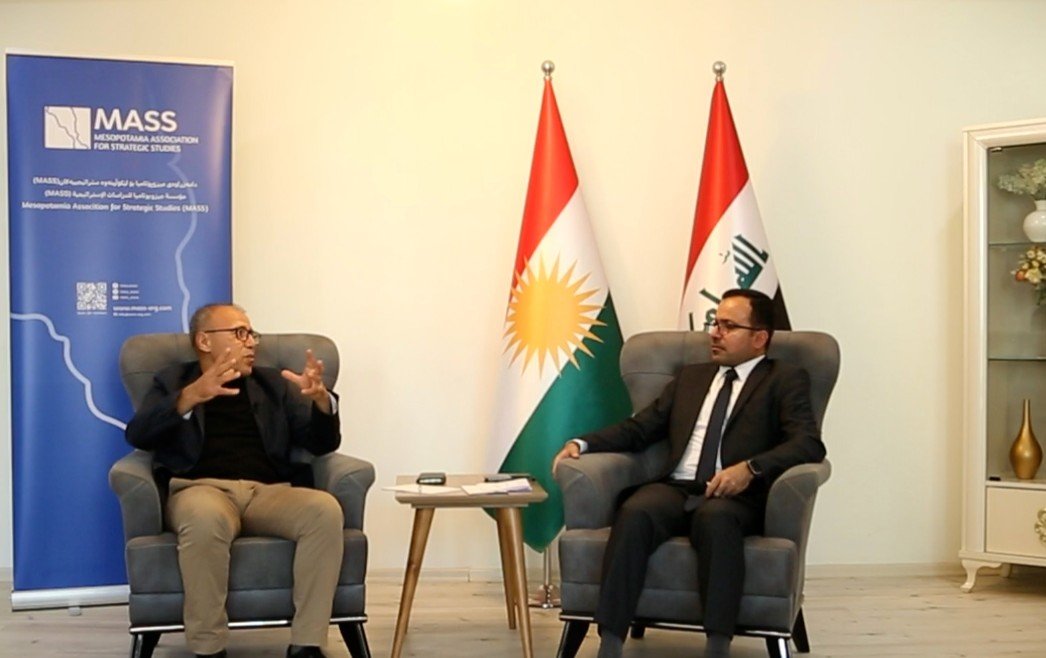
Today, many old and renewed geostrategic projects are being proposed worldwide to connect the different parts of the world, such as the Chinese Belt and Road Initiative or the Russian Arctic Road Project, alongside existing traditional roads. Another project recently proposed by the Iraqi government, called the Development Road, was previously proposed as the Dry Canal Road. The ill-considered discussion surrounding the project, even before its feasibility study, has sparked much internal and external debate and concerns. At our second meeting, we discussed this at length. It has become imperative to attempt to reformulate this project to bridge the major gaps and deficiencies in Iraq’s infrastructure and make it a tool for internal integration and consolidation among its various components and governorates, while simultaneously mitigating external repercussions and concerns from this project even before its inception.
Iraq’s geopolitical location, its human and natural capabilities, and even its ethnic, religious, and sectarian diversity can be leveraged within the framework of a geostrategic and economic project that connects all its components and serves the public good, the national interest, and the interests of its citizens, on the one hand. This can then transform Iraq into a bridge linking East and West, and the Gulf and the Mediterranean, making it the “beating heart” of international land trade. However, this requires that Iraq be an extension of its citizens, components, forces, and internal capabilities, rather than being transformed into an extension of the strategic and national projects of other countries and international and regional blocs. I know that talking about such a project can be considered difficult to achieve, especially in light of the current situation and the accumulation of political, security and economic crises, but the “Pulsating Heart Strategy” is the gateway to solving Iraq’s internal and external problems and crises. It helps it bridge the gap between its components and build a strong national economy that helps strengthen internal political stability and its national political, military, security and economic institutions in the service of the public good, i.e. it strengthens the state’s structure internally, which helps it extend the greatest degree of sovereignty externally in an international environment where achieving absolute sovereignty, even for large countries, has become a fantasy. Without building a national project that citizens believe fulfills their aspirations for a decent life, Iraq will remain captive to particular factional agendas and increasingly become an arena for settling scores for others. If a country fails to exploit its strengths and resources, these factors could become heavy burdens on the state, weakening it rather than strengthening it.
Therefore, we propose reframing the development path project and transforming it into a project for genuine development at the Iraqi level before considering development at the regional level. For example, changing the conflictual relationship between the Kurdistan Region and successive governments across Iraq from a zero-sum conflict to a complementary relationship based on win-win outcomes will strengthen internal cohesion, weaken external interference, and open new horizons for an active foreign policy for the state.
1. Quoted from: Dr. Wahid An’am Al-Kakai, The Geopolitics of Oil and Gas in the Kurdistan Region of Iraq and Regional and International Actors, p. 767, at the following link:
https://djhr.uodiyala.edu.iq/index.php/DJHR2022/article/view/1361/1260
 Previous Post
 Next Post