

What are the treatments after confession?
D. Yousef Mohammed Sadiq
Start
In early 2014, the seventh cabinet of the Kurdistan Region organized a meeting with members of the fourth session of the Kurdistan Parliament, the leaders of the Kurdish factions of the second session of the Iraqi Parliament, Kurdish members of the Finance and Oil and Gas Committees Representatives. It was the day when the then Minister of Finance, Rahmati Sheikh Bayaz, said: “What are you talking about? They have taken my bag now”! I wish they had taken his bag!
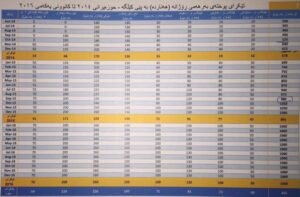
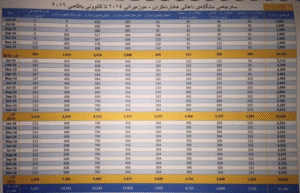
The aim of the meeting was to discuss the issue of independent oil sales and financial problems between the Kurdistan Region and Baghdad, which then as now, Baghdad had just cut the budget of the region. On that day, in several other meetings between the government and the Kurdistan Parliament, the then Prime Minister Nechirvan Barzani and Dr. Ashti Hawrami, the former minister of natural resources, and the government team argued that it was in the region’s interest to sell oil independently, thus creating an independent economy. Ashti Hawrami presented several charts that are attached and according to these charts, it was claimed that by the end of 2015, the region can export more than one million (1,060,000) barrels of oil from the oil fields in the region, excluding Kirkuk According to Ashti Hawrami, the KRG’s monthly revenue at the end of 2015 would have been more than $3 billion (3,222,000,000) dollars!
At the same time, we criticized this policy and in a meeting with the Regional Oil and Gas Council before the fourth presidential election, we said that it would be wrong for all oil countries to rely on oil as their only source of income because of price volatility It is a double mistake for the Kurdistan Region, because it has no access to international waters and its oil exports will always be held hostage to the policies of neighboring countries.
Now, six years after these false claims, the amount of oil production in the Kurdistan Region is less than half a million barrels per day It’s losing instead of making a profit!
However, the oil reserves of the Kurdistan Region as announced by the Ministry of Natural Resources in 2009 was (45) billion barrels, which ranked the region ninth in the world. The Kurdistan Region’s natural gas reserves were estimated at 200 trillion cubic feet, ranking it eighth in the world. But despite this huge potential in the field of energy, the oil card is now burned in the hands of the region, putting it on the verge of economic collapse.
The Kurdistan Regional Government (KRG) has finally acknowledged the failure of its past oil and gas policy, saying it has not only failed to strengthen the region, but has also “left a debt of $27 billion for the current cabinet.” Recognition is important, but it has no value unless it leads to a radical review and change of the entire policy, procedures and management of the oil and gas file, which is at the same time a political file
The economy, likewise, has both domestic and Iraqi and external consequences. Now more than ever, we need to assess the backward policy of the Kurdistan Regional Government authorities in the field of oil and gas, by identifying responsibilities, and at the same time presenting solutions to overcome the economic and political crisis in the region.
Part 1: Who is responsible?
The failed policy of independent oil sales has caused several major economic, political and strategic losses in the Kurdistan Region. including:
1. Because of this policy and the independent sale of oil, Baghdad cut the budget of the Kurdistan Region, and the oil sold to the region, or rather the oil looted by the region, could never replace that part of the Iraqi budget. Between 2003 and 2014, according to a study by Mohammed Awad al-Attabi, 91,076,988 dinars came to the Kurdistan Region from Iraq alone. However, this share of the KRG’s budget in Baghdad has been constantly increasing. For example, the 2013 budget of the Kurdistan Region (15,338,053) was fifteen trillion three hundred and thirty-eight billion fifty-three million dinars. As is well known, most of the projects in the region belonged to the time when the budget came from Baghdad. From 2014 to 2018, except in early 2015, no budget came from Baghdad to the Kurdistan Region. Since then, the region has owed eight full salaries and 34 arrears. Who is responsible for the lack of tens of billions of dollars from the Kurdistan Region’s budget from Baghdad?
2. Again, due to the independent sale of oil, it is said that “the region owes $ 27 billion.” However, it is not known whether this is true or not. Why is the loan made? Isn’t this money laundering? If so, he asks like an ordinary citizen and as a tragic joke, “Has oil been sold or bought!?” But if that is true, then the citizens of the region, have been put under the burden of long-term debt that will take years to get out of. This issue has now become a subject of debate not only among analysts, journalists and political activists, but also among the authorities in the region. To prove the truth of the total revenue and debts of the region over the past six years, the current and former members of the Regional Oil and Gas Council (some of whom are still in power) should be summoned before the parliament and its committees.
3. Due to the independent sale of oil, hundreds of millions of barrels of oil for the present and future generations of the region were cheapened and wasted. Not only has the share of future generations not been taken into account, but the present generations are also deprived of its benefits.
4. Most of the process of exploration, production, transportation and sale of oil and gas in the region, collection and distribution of revenues are unclear and it is not known what will be done with it? As a result, the people of the region are becoming poorer and poorer, and an elite is increasing their capital like a mafia. The middle class of the region is shrinking and the differences and injustice between the classes are widening, which is likely to cause an explosion of hatred and anger of the disgruntled people of the region in the near future.
5. Apart from the oil and gas revenues, even the sweet money (commission) of the contracts is not known. In 2009, Prime Minister Nechirvan Barzani announced that the $5 billion in oil contracts would be paid to the sixth cabinet. Barham Salih, leaves. Nobody knows what happened to the money between the two cabinets!? How many other contracts have been signed since then? How much is their commission money? where is it whose is it Who is responsible for their disappearance? What is the role of the courts and the prosecutor general in investigating these cases? For example, Bloomberg reported that between 2017 and 2018, the amount of (250,000,000) two hundred and fifty million dollars as assistance to pass contracts with the Kurdistan Region, by this company to an outside consultant. According to the report, thanks to these contracts, Rosneft has become a character with foreign dominance over the oil industry in the region (2). After raising this issue, an investigation was sent to the prosecutor general, but again no results are known and it is not known who received it and why?
6. The contracts that the region has made with oil and gas companies are in the form of production sharing contracts, which provide a lot of profits for the companies Share in the oil produced. These types of contracts are mostly for places where there is a lot of risk and cost. For example, in the oceans and seas. Iraq’s contracts are still service contracts, meaning that Iraq pays a small amount of money for each barrel of oil, rather than profit sharing. Therefore, the companies operating in the region have become very profitable, provided that some of them were originally small companies. For example, the Norwegian company DNO made a profit of $110 million from the oil in 2011 alone, while the Kurdish people became poorer thanks to these contracts and the salaries of the Kurdistan Regional Government employees became a quarter and half a salary.
7. As a consequence of the previous point, the cost of producing oil in the Kurdistan Region is higher than the cost of producing oil from Iraqi fields. According to former Iraqi Oil Minister Samer Ghazban, the rent of oil companies for each barrel of oil from Iraqi oil fields ($ 1.44) is $ 1.44 cents. The cost of production and transportation is $9 to $9.5 per barrel. In contrast, the profits of oil companies in the region vary according to the price of oil, and thus the cost of production and transportation of oil in the region. However, according to Samer Ghazban, the region will receive 55% of the money from the sale of oil, which means that about 45% of the revenue from the sale of oil goes to companies and oil transportation fees (Rosneft and Kar). Iraq receives more than 86 percent of its oil sales. That is why Iraq is not ready to take the money of the oil and gas companies in the region!
8. The region will also lose money from extracting its oil elsewhere when it sells it independently. The price of oil in the Kurdistan Region is about $7 below Brent. Iraqi oil is $4 below Brent. So here too, the Kurdistan Region loses $3 per barrel compared to Iraq. Who is responsible for making all these harmful contracts? does he take responsibility So that the companies make more profits and the people of the region suffer more, and the oil of the region is cheaper than the oil of other countries?
9. As a result of inexperience in contracting, giving too many concessions to companies, and subsequent problems, sometimes the region has suffered hundreds of millions of dollars in losses. The best example is the contract with Dana Gas, which forced the Kurdistan Region to pay compensation to the company in the amount of $2,240,000,000 (4). The judicial dispute also disrupted a $10 billion investment project near Chamchamal, which included a petrochemical plant, an oil institute, a university of technology, 5,000 housing units with markets, hospitals, schools, cinemas and all requirements. Who is responsible for paying this money from the daily pockets of the people of the region just to punish a legal dispute!? Did the people of the Kurdistan Region benefit from half of the compensation in the contract with the company?
10. Sometimes the corrupt authorities of the region have made a bigger and more fatal mistake in order to cover up their mistakes and failures. For example, in 2017, the Kurdistan Regional Government signed a contract with Russian oil company Rosneft to receive a loan of $2.1 billion, of which $1 billion was paid back to Dana Gas in exchange for part of the compensation. As a result, three days after the capture of Kirkuk and the conflict areas by Iraqi forces on October 16, 2017, the Kurdistan Region announced that it had sold 60% of the ownership of the pipeline to the company. However, the entry of a Russian company into the issue of oil and gas in the region has had a major negative consequence on the position of the region in regional and international conflicts. This is in addition to the opportunity for Russia to control the gas reserves of the region (the region has already awarded the contract to lay the pipeline to Rosneft), which is considered one of the pillars of Russian national security.
11. Due to the reliance on oil as the only source of income, other economic sectors such as agriculture, industry and tourism, despite the great potential of the region in this field, were disrupted. Instead of allocating the missing oil revenues to develop these sectors, much of the oil money has been wasted, and a kind of consumer economy has been developed that has greatly weakened production in all areas. Extraction and sale of oil in the region has become a losing gamble not only in this sector, but also for other sectors of the economy. Not only has oil not become an industry for accumulating capital, but it has become the only stake in economic activity, resulting in the loss of other sectors of the economy. The oil and gas sector could have been developed as one of the economic sectors of the region, step by step and with a long-term plan.
12. All these reasons have made the extraction and sale of oil not the weapon and strength of the Kurdistan Region against Baghdad, but on the contrary, the oil of the Kurdistan Region has become a weakness The Kurdistan Region in the balance of its conflicts with Baghdad. The current bad oil policy has not only failed to create an independent economy for the region, but has also fatally made it backward to Baghdad. If the money does not come to the Kurdistan Region from Baghdad every month, the Kurdistan Region will not be able to pay the salaries of its employees in full and on time. All the money that came from Baghdad, all the sweet money from the oil and gas contracts and the sale of their products, did not lead to the independence of a productive economy in the Kurdistan Region. Now the Kurdistan Region does not know what to do with its oil! On the one hand, it is under pressure from the oil companies and on the other hand, it is under pressure from Baghdad. His oil doesn’t make money. There were no other sources of income besides oil! Who is responsible for the depletion of the region’s underground resources, the collapse of the region’s economy and its further weakening against Baghdad?
13. As a result of the above point, the weakness of the region in the oil and budget issues, led to the marginalization of the historical problems of the region with Baghdad, which are now no longer a priority on the agenda of the region with Baghdad. Therefore, the Kurds of the conflict areas are still addicted to the old and new Arabization policies, laws and decisions. This is in addition to the risk of reorganization of terrorist groups in these areas and create a threat to the population and even the Kurdistan Region. Even when the entire conflict areas fell to the Kurdish forces for the first time in the history of at least the past hundred years, instead of looking at the people tired of the conflict in these areas, including all communities, By serving its indigenous population, they unfortunately focused more on selling their oil and gas and neglected the people. The PUK and KDP in these areas, by adopting policies based on personal and party interests, have caused even a large part of the Kurds in these areas, let alone citizens of other communities, to want to return to the region don’t be. The region could have used its oil and gas reserves as a strong card to resolve other issues with Baghdad, especially by demonstrating its oil and gas potential, selling it without auctioning it, and developing only one or two fields to produce domestic needs The problem of the conflict areas.
14. The wrong policy of the region in the field of oil and gas has weakened its regional relations. Because Turkey has become the only gateway for the Kurdistan Region to export its oil, the entire economy of the region has become hostage to Turkey. In 2016, the Kurdistan Region asked Turkey to buy some of its oil fields in exchange for $1 billion in debt forgiveness and another $5 billion, but Turkey refused to take the risk. The Kurdistan Regional Government (KRG) has announced that it has signed a 50-year agreement with Turkey that includes security issues in addition to oil and gas. However, neither the Kurdistan Parliament nor the Kurdish public opinion is aware of the contents of the agreement and its economic, political and security provisions. However, it is no secret that the consequences of the agreement are clearly visible in all its dimensions and, even politically, for a long time, the power in the Kurdistan Region has become a backwardness of Turkey, especially in relation to West Kurdistan. In addition, Turkey has become an independent variable in the relationship between the Kurdistan Region and Baghdad. in such a way that each An agreement and rapprochement with Baghdad now first requires securing Turkish support.
Who is responsible for all these fatal current and future political, economic, internal and external security consequences of the failed oil policy of the region?
It is good that the current authorities in the region acknowledge the failure of this policy. But is this enough? Should we leave it behind and start over? Is it possible that the fate of a nation at the hands of its rulers will always be like a snake game and we will always return to zero by gambling on the wrong words? Just as the referendum and its consequences on October 16, 2017, the goal of independence and even half of Kurdistan, which for the first time in the past hundred years, with the blood and sacrifice of thousands of martyrs and wounded Peshmergas Iraq was very weak. It is said that there was a betrayal on October 16, but where is the impartial investigation and accountability on this issue and the issue of holding a referendum without taking into account the consequences? The living nations of the world progress because they always evaluate and hold accountable in success and failure, evaluate the bright and positive as well as the dark and negative, hold accountable and determine responsibility.
Therefore, if the region wants to escape the failure of the past bad policies, it must evaluate and hold accountable through its institutions. As we have mentioned, despite the current disability of the parliament, but if you want to restore some glory to this institution, then you should summon the former and current officials of the oil file in the region They should be identified and held accountable.
In parallel, genuine reforms in how revenue is generated, diversification and transparency, as well as reforms in how revenue is spent and fairness in revenue distribution are a current need to continue the life of regional branch governance.
At the same time, transparent accountability and finding a realistic and legal solution to all the tens of billions of dollars of revenue that are not visible and have been taken abroad are another important aspect of resolving the financial and economic crisis in the region. If the Kurdistan Regional Government (KRG) authorities want to continue their power and the ruins of the failed experience of governance in the region do not fall on them due to the anger of the people, they must start their own pockets and bank accounts. The file of the money taken abroad, in the past and now at the level of Iraq and abroad, has been a priority of our work, and we will not give up and continue on it.
However, these are not enough. The current situation in the oil and gas sector in the region and its domestic, Iraqi and foreign consequences are so complicated that the region alone cannot escape from its trap. Perhaps a new vision for relations with Iraq and a new beginning with Baghdad
On the whole oil and gas file of the region, using the Iraqi constitution, include another part of the solution that we will discuss in the next section.
Part 2: Joint solution with Iraq
First, the history of the relationship between the two sides and the escape to the future
A key lesson from the failure of the 2017 referendum that the Kurdistan Regional Government should better understand is that our presence in Iraq is not only an Iraqi variable, but also a regional and international variable. In other words, changing the relationship between the Kurdistan Region and Baghdad is not only related to Baghdad, but also affects the balance of power, regional and even international equations.
Iraq is a post-World War I state. The establishment of this state, the determination of its borders and even the determination of its king was not an internal decision of the Iraqi people, but the result of the decisions of the victorious states (especially Britain) and pre- and post-war agreements. Thus, the Kurds have been forced into Iraq for nearly a century, and have been in constant struggle with successive authorities in Baghdad to assert their rights. The essential question here is that if the region’s remaining within the framework of Iraq is a current reality, why not try to take advantage of our existence within the framework of Iraq instead of running away from this compulsion and thus always suffer? Especially now that most of the rights of the region are recognized within the framework of the Iraqi constitution. What has not been achieved is the main negligence of the Kurdistan Regional Government (KRG) authorities themselves, despite the opposition of some Baghdad officials.
On the other hand, Iraq, as a state created throughout the past century, has not been able to become a successful state. One of the main reasons for the failure of the Iraqi state was its problems with the Kurds and its attempt to impose a single ethnic identity and the central government. Even one of the main reasons for Iraq’s foreign wars was related to the previous regime’s unwillingness to prove a just solution to the Kurdish problem. Note that the Ba’ath regime was not willing to prove the Kurdish rights in Kirkuk, so it compromised with Iran in the Arabian Peninsula in the Algiers Agreement in exchange for the Shah’s refusal to help the Kurds. The dispute over this agreement was one of the causes of the first Gulf War, and this war and its consequences were the main cause of the second Gulf War. Despite its foreign compromise with Iran, Ba’ath failed to crush the Kurds, and, among other things, Iraq was caught up in a series of bloody internal and external conflicts that resulted in the collapse of his regime. If it had been soft on the Kurds and their demands, especially in Kirkuk, it would have solved some of Iraq’s internal problems and become stronger against the outside world, and it might not have been involved in many of its external problems.
Isn’t it time to replace this reverse relationship between the Kurdistan Region and Baghdad with a new view of a relationship based on common interests between the two sides? Can’t an economic and then political integration be established between the two sides instead of political and economic opposition? How long will resources be wasted in this conflict instead of building political and economic stability? Iraq, including the Kurdistan Region, can become a successful state if it can have a new national strategy, especially in the economic field.
Iraq’s geopolitical location has given it the opportunity to become the heart of international trade routes, connecting east and west, the Gulf and the Mediterranean, and there are currently several projects in this area. The Kurdistan Region will play a very important role in such a project. The Kurdistan Region and Baghdad can complement each other in terms of energy (oil, gas, electricity), water, agricultural land and tourism, security and fighting common threats, especially terrorism, and even in international and regional relations. Changing the relationship between the two sides from a relationship of confrontation and compulsory troublesome togetherness to a voluntary relationship of complementarity and mutual interest will strengthen both sides. Such a relationship, of course, requires a political elite on both sides that thinks at the level of the state, not at the level of personal and party interests, and from the perspective of narrow tribal minds, which are currently very rare. Such a project weakens the business of continuing power through the false promotion of ethnic and religious opposition, independence and centralism by some political forces in the region and Baghdad. Those who instigate the streets against each other, but when it comes to the distribution of positions and privileges, no one like these on either side, do not reach an agreement quickly. Therefore, such a view, which relies on resolving issues on the basis of the public interest and national partnership, will have many opponents.
Second, oil and relations between the Kurdistan Region and Baghdad
As far as the oil policy of the Kurdistan Region is concerned, as we mentioned earlier, it has become a weakness of the Kurdistan Region with Baghdad, has become a lock for the development of relations between the two sides. Oil itself is constantly losing its importance, especially due to the increase in alternative energy and the development of alternative energy technologies. Also due to the increase in alternative oil to OPEC, especially shale oil, increased competition between oil producers within OPEC and outside, and decreased US interest in Middle Eastern oil.
The region could make energy the key to solving other problems with Iraq. But on condition that the region is ready to review and correct its overall oil policy, because Iraq is unlikely to accept the oil contracts and oil exports, as it is now. Iraq currently has two complaints about the Kurdistan Region’s independent oil exports. One is against Turkey in the Court of Arbitration of the Paris Chamber of Commerce, and the other is against the Kurdistan Region in the Iraqi Federal Supreme Court. The Kurdistan Region must reach an agreement with Baghdad on energy in general and oil in particular before resolving these complaints. The new Iraqi government, led by Mustafa Kazemi, has expressed its readiness to negotiate and reach an agreement in June.
Along with these discussions, however, the region also needs a public relations campaign with the Iraqi journalistic, cultural and academic elite and public opinion in the Iraqi provinces. The irresponsible and arrogant statements of some of the Kurdistan Regional Government officials in the previous phase, the referendum and its failure, and the spread of corruption in the Kurdistan Regional Government have directed the Iraqi streets against the region. The prevailing trend in the Iraqi Arab street regarding the Kurdistan Region is that the Kurdistan Regional Government authorities steal the oil and sell it for themselves without paying a single dinar
The federal government also sends money to the Kurdistan Region from Basra oil. Therefore, internal reform, changing the discourse oriented towards Baghdad, working on finding a common language, common interests and willingness to be transparent will be effective for the Iraqi government not to be afraid of an agreement with the region.
Third, the constitutional perspective on oil issues
In our view, the oil and gas file in the Kurdistan Region has some constitutional problems. Both Articles 111 and 112 of the Iraqi Constitution describe how the oil and gas file should be regulated between the federal government, the Kurdistan Regional Government and the oil and gas producing provinces. Article 111 states that oil and gas are the property of all Iraqi people in all regions and provinces. Therefore, ownership of all Iraqi oil and gas fields is federal. Thus, the collection and distribution of oil and gas revenues must remain federal, to some extent. The criteria for distributing federal revenue according to the constitution are:
1. Population and its distribution among the regions and provinces (M. 112/1).
2. Compensation to the Kurdistan Region for the damage caused by the policies of the previous regime to achieve balanced development throughout Iraq (Article 112/1). The amount and duration of the compensation are left open.
3. Allocate a certain portion of federal revenue equitably to the regions and provinces to carry out their affairs and fulfill their constitutional responsibilities (Article 121/3).
4. Petrodollars for producing provinces in accordance with provincial laws and annual budget laws.
However, the constitution in Article 112/1 defines two stages for the management of the oil and gas sector. The pre-implementation phase of the constitution on May 20, 2006, during which the management of this sector is shared between the federal government, the regions and the producing provinces. The second stage is the post-implementation stage, which the constitution is silent about, based on Article 115, which states that anything that was not mentioned in the powers of the federal government is the power of the region and the unorganized provinces. Accordingly, the management of the oil and gas fields that were not produced before 20/5/2006 is in the power of the region and the unorganized provinces in the region.
However, the Iraqi constitution in Article 112/2 sets conditions for this second phase of administration. That is, the federal government, the regions and the producing provinces, together, develop the necessary strategies to develop oil and gas resources, in a way that ensures the maximum benefits for the Iraqi people, based on the latest market-based techniques and investment incentives.
Hence, the management of the oil and gas sector in the region has constitutional problems. Without going back to the federal government and even the producing provinces in the region (Article 112 refers to the producing provinces, not the unorganized provinces in the region or unorganized producing provinces in the region). There is also Kurdistan.
This article also gives the Kurdistan Region the right to participate in the development of the oil and gas sector and how to use its revenues throughout Iraq. Oil has not become a source of capital in Iraq. Iraqi oil has served the agenda of successive Iraqi regimes in the past, and the continuation of internal and external conflicts and wars, and Iraqi citizens have not only benefited the least, but often burned by the fire. In the new post-Saddam era, like the Kurdistan Region, the corruption of the Iraqi authorities has made ordinary citizens the least beneficiaries of Iraqi oil revenues. Oil in Iraq has also led to the backwardness of other sectors of the economy, widespread poverty and has not been a source of basic services.
If the Kurdistan Regional Government wants to get rid of all the errors that have occurred in the field of oil and gas policy, then within the framework of the second paragraph of Article 112, with the assistance of the federal government and producing provinces.
Fourth, joint work in the field of natural gas
The KRG’s gas sector is a wider area for increased production away from the previous corrupt policies and in cooperation with the federal government. Cooperation between the Kurdistan Region and Baghdad in the gas sector, which is a current need of Iraq for energy production, especially electricity, opens the door to a new relationship based on common interests and complementarity, paving the way for resolving other fundamental issues between the two sides. Such a move also creates confidence that both sides will not deal with each other in a tactical and short-term manner, which is a major problem facing the current negotiations. Baghdad suspects that the Kurdistan Region wants to make an interim agreement because of the decline in oil prices and whenever the price of oil rises, it will return to its policy and sell oil independently.
At the same time, the gas sector is not only a domestic need of the region, but also has a more secure future in the global energy market than oil. The development of the gas sector in the Kurdistan Region, if combined with a strategic vision for the development of economic infrastructure, especially the transportation sector in partnership with Iraq, will put the Kurdistan Region in a strong position on the global energy map and international politics.
outcome:
The mismanagement of the oil and gas sector in the past 15 years has brought the Kurdistan Region to the brink of economic collapse and has not only failed to create a savings fund for the financial crisis and for future generations. Investment in the Kurdistan Region’s natural resources has not only not brought prosperity to the citizens of the region, but has also led to increased poverty. Oil and gas revenues not only did not strengthen the region’s economy, but also weakened the industrial, agricultural and tourism sectors.
The bad consequences of this policy are not only economic, but also have deadly political consequences. From the further weakening of the region’s institutions, to the weakening of democracy and the political monopoly of an elite based on economic monopoly and corruption, political and economic dependence on neighboring countries, and the weakening of the region in the internal equations of Iraq. The extraction of oil and gas in the region has not only not been a strong card against Baghdad to resolve its long-standing problems with Baghdad, but also a weakness of the region, which made the solution of other issues such as territorial issues.
After starting to extract and sell oil independently, the Kurdistan Regional Government (KRG) authorities made a series of mistakes without careful research and study, and sometimes they made bigger mistakes. The oil and gas issue in the Kurdistan Region has become a complex issue full of local, regional and international characters and dimensions.
Recognizing the failure of the past oil and gas policy in the region will be acceptable when the whole policy is subjected to accountability surgery, identifying responsibility, taking responsibility and correcting the wrongs. Similarly, it needs to build a new relationship with the Iraqi federal government based on mutual interests and integration, not only in the field of energy, but also in other sectors of the economy.
margin:
1. Mohammed Awad al-Attabi: These Wealth of Iraq, A Comparative Statistical Study of the Reconciliation Balances of the Year 2003 Year 2018, p.
2. See the text of the report on 2/ 3/ 2020:
Jack Farchy & Javier Blas, Russia’s State Oil Company Paid Mystery Consultant $250 Million in Iraq Deal, in site:
https://www.bloomberg.com/news/articles/2020-03-02/rosneft-paid-mystery-consultant-250-million-in-iraq-oil-deal
3. See the interview of Samer Ghazban, former Iraqi Oil Minister, on Sharqia TV on 25/4/2 Link to the interview:
https://www.facebook.com/sharqiyatv/videos/613593195900776/
For more information on Iraqi oil contracts, see Hamza al-Jawaheri, Movements of Oil Leases in Iraq, at
https://almasalah.com/ar/news/171816/Julat-al-trakhis-al-naftiyah-balarqam
4. For more information, see:
Dmitry Zhdannikov, Kurdistan pays $1 billion to Dana Gas, partners to settle London case, in site:
https://www.reuters.com/article/us-dana-gas-arbitration/kurdistan-pays-1-billion-to-dana-gas-partners-to-settle-london-case-idUSKCN1BA272
https://www.reuters.com/article/us-dana-gas-arbitration/kurdistan-pays-1-billion-to-dana-gas-partners-to-settle-london-case-idUSKCN1BA272
5. For more information, see:
Mariya Petkova, What did Russia get from its KRG gamble?, in site:
https://www.aljazeera.com/indepth/features/russia-krg-gamble-rosneft-iraq-kurdistan-190409123038460.html
6. See ibid., ibid.
7. For more information on the complaints about the oil in the Kurdistan Region, see: Bahroz Jaafar, The Danger of Complaints about the Energy Sector of the Kurdistan Region, 4/ 9/ 2019 at:
http://www.mirs.co/KU/details.aspx?jimare=158
The Kurdistan Regional Government (KRG) and former Natural Resources Minister Ashti Hawrami have filed a lawsuit in the Royal Court against Dynasty, which is seeking $1.5 billion in compensation for obstructing the company’s deal with Repsol. For more information, see:
Simon Watkins, Rampant Corruption In The World’s Last Oil Frontier, Aug 20, 2019, In Site:
https://oilprice.com/Energy/Energy-General/Rampant-Corruption-In-The-Worlds-Last-Oil-Frontier.html
 Previous Post
 Next Post